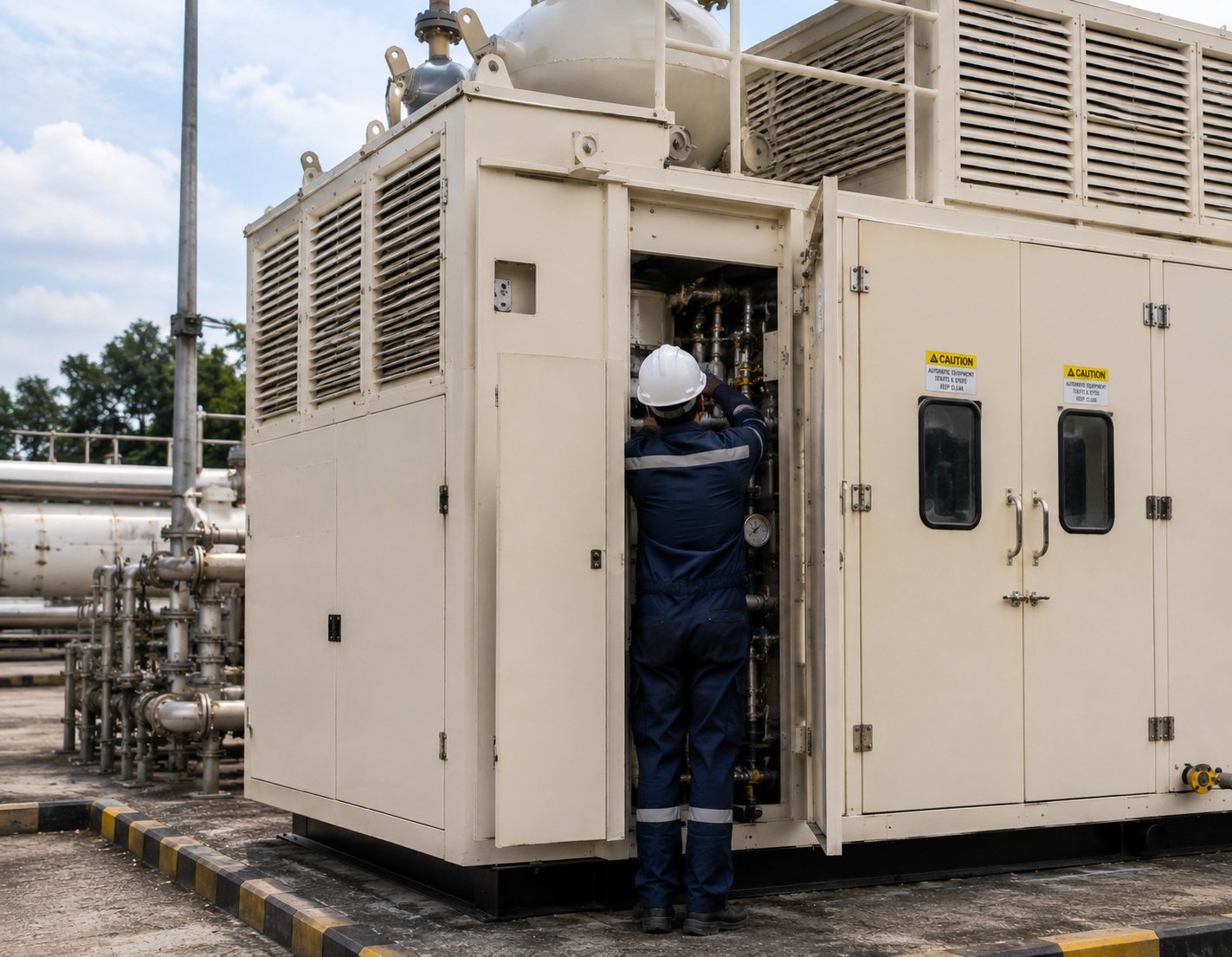
Compression as a Service (CaaS)
Compression as a Service (CaaS) is a natural progression to the conventional COCO, DODO, and Full DODO models, offering a flexible and scalable approach to CNG infrastructure.
It is a low investment, high return model where compression, storage, and dispensing equipment are provided on a service basis. The model operates on a pay-per-use structure, where charges are linked to per kg sale of CNG with a nominal guaranteed offtake.
CaaS enables efficient deployment of CNG stations without significant upfront capital investment, while ensuring operational reliability, energy efficiency, and performance consistency.
Key Features
Pay-per-use model aligned with actual gas sales
Safeguards brand value and operational control
Scalable capacity with increasing demand
Bridges technical gaps between CGD and DODO operators
Ensures safety in operations and system reliability
Integrated remote monitoring and diagnostics
Guaranteed energy consumption over operations
Designed for long-term operational efficiency
Transparent gas reconciliation and reporting
International safety compliance
Scope of Offering
The CaaS model covers key components and services required for CNG station operations. This integrated scope ensures that critical assets and operational functions are managed under a structured framework.
Systems
Dispensers
Cascades
Utility Systems
a Service (CaaS)
Infrastructure
Maintenance Services
Monitoring Systems
Pipeline Injection
Responsibility Structure
Under the CaaS model, responsibilities are clearly defined between the station owner and the service provider. This structure enables efficient division of responsibilities while reducing technical and operational complexity for the station owner.
Handled by Station Owner (DODO / CGD)
Handled under CaaS Model
Land
Compressor systems and UPS
Civil works including building and foundation
Dispensers and cascades
Licensing and statutory approvals
Tubing and station integration
Cash management and operations oversight
Maintenance and operations
Security and safety compliance
Remote monitoring and diagnostics
Power connection and basic utilities
Guaranteed energy consumption performance
Operational Benefits
- Reduced dependency on multiple service providers
- Improved system reliability and uptime
- Optimized energy footprint across operations
- Simplified management and reporting structure
- Enhanced visibility through remote monitoring systems
- Long-term cost efficiency through integrated maintenance